How Can Tyler School of Art Support You in Your Personal and Professional Goals
Should I go to art school?
Should I go to art schoolhouse? It's a question you'll be asking yourself if you want to join a big-proper noun studio, work on AAA video games, blockbuster films or a groundbreaking TV series. Is a degree the all-time option, or would it be better to teach yourself through online tutorials and courses?
We've spoken to artists who accept lived through that decision, and come out the other side with groovy communication on which choice might be the best ane for you. Whatever pick you brand, though, you'll demand a killer pattern portfolio, and y'all might even find a dream chore or internship over on our design jobs board.
So how do y'all decide?
Usefully, Lauren Panepinto, creative managing director and VP of Orbit Books, has created a natural language-in-cheek flowchart that can help guide you towards an informed choice.
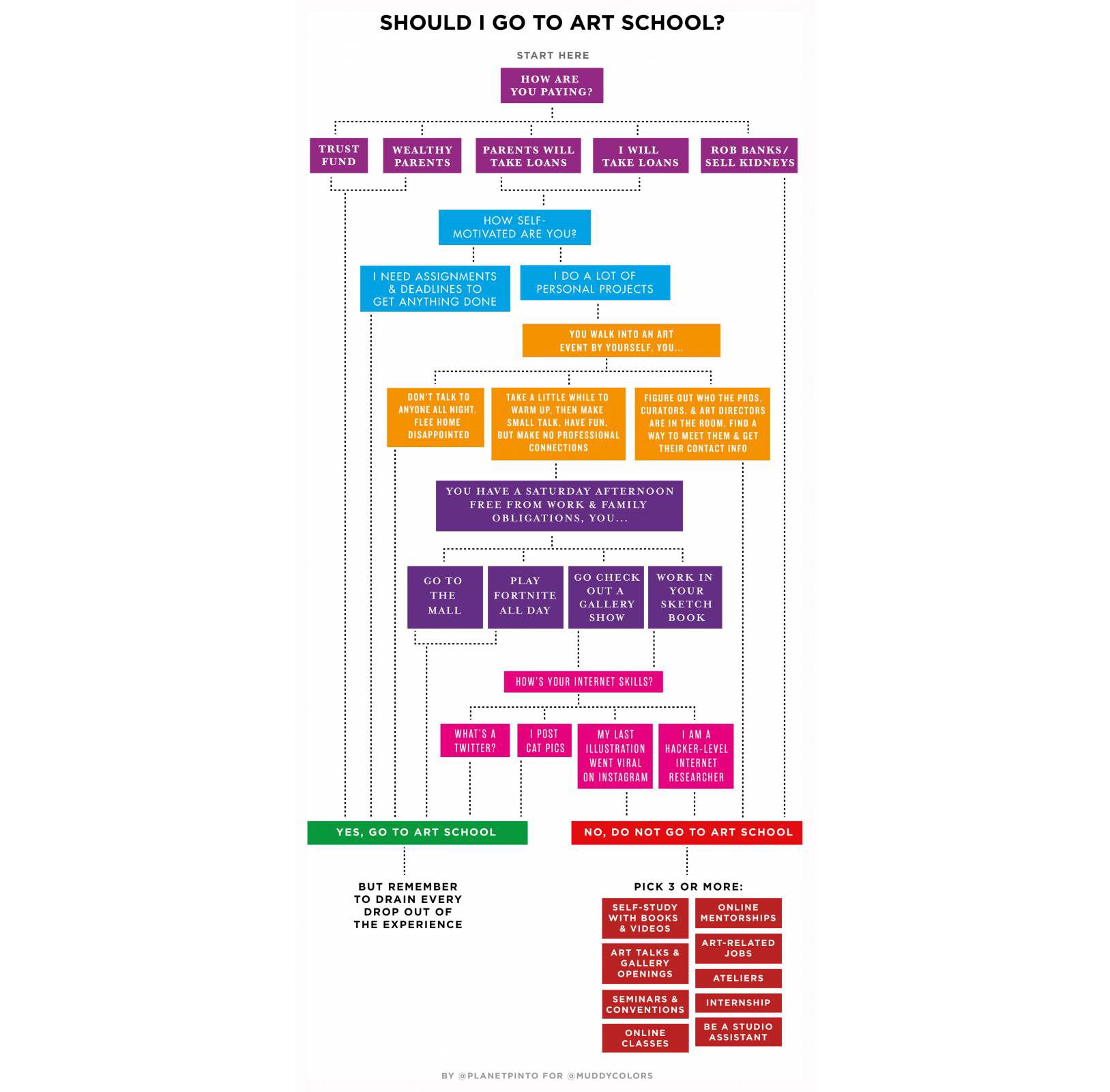
But if that hasn't quite helped you make upward your listen for you lot, here are some more words of wisdom from successful artists.
In 2016, Daniel Tal graduated with a BA in practical arts blitheness from Sheridan College in Oakville, Canada. He's since been employed as a story artist with Pipeline Studios in Hamilton, and so the formal path clearly worked for him. Nevertheless he has a startling admission. "I realised virtually a year or two into college that the unabridged curriculum, more or less, "was doable on my own," he recalls. "Almost everything school teaches you, you can larn yourself through books and the internet."
That said, Tal doesn't regret his BA. "I'm not the type of person who can self-regulate well," he says, "and going through a formal programme forces you to avoid procrastination." Information technology also exposes y'all to things y'all might non have considered. "I only found interest in storyboarding in my second yr of college," says Tal. "Had I non gone, I don't think I would take e'er tried it."
School doesn't have it all
Not all courses are perfect, of class. Mélanie Bourgeois, now a concept artist for Volta, had a less-than satisfactory feel studying 2nd and 3D animation at a university in Quebec. "I was part of the showtime cohort, so a lot of things moved around when I attended," she says. "None of the teachers were 2D animators, and while they were very nice, none of them had the skills to mentor a student hands-on when it came to 2D." Consequently, Bourgeois had to fill in the gaps herself, using online learning resources. Yet she's unsure how well she'd take coped if she'd cocky-taught entirely. "School helped me focus; I might have found information technology overwhelming all on my own," she says.
"Online learning also doesn't provide the same level of contacts and networks, or force yous to swallow civilisation outside your personal tastes." The option largely depends, Conservative feels, on the private. "I know many successful artists who are self-taught," she says. "And no one is going to reject a proficient creative person considering they don't have a slice of newspaper."
Only if both paths are valid, which is correct for y'all? "It's a very tough determination, with many factors to consider," says Nick Fredin of online class provider CG Spectrum. A major one is cost: "In the United states of america, degrees can toll over $100,000, with no guarantee of a chore at the end of it." Going it alone, though, can be daunting. "Without structured pathways guiding you towards your goals, cocky-teaching can be overwhelming and frustrating," he cautions. "Opening a tool like Maya for the first fourth dimension can exist pretty scary."
Student debt tin be a factor
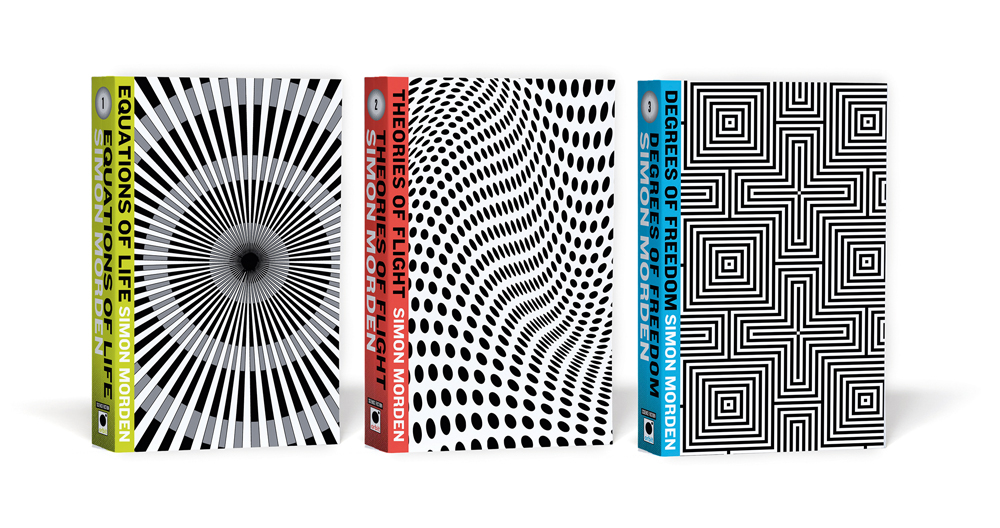
Then what's Panepinto'due south personal take? "I'thousand glad I went to art school," she says. "But if I had to do it again, and get into deep debt as a effect, I probably wouldn't. I'd get to a community higher, go a cheaper, well rounded degree, and written report fine art on the side. I'd employ the money I'd saved to travel to seminars and conventions, and have online mentorships."
You'd might await Sean Andrew Murray – a concept creative person for the amusement industry who as well teaches Illustration at Ringling College of Fine art and Pattern in Florida – to disapprove of self teaching. Merely he, as well, can meet the benefits. "It enables you to arts and crafts exactly the kind of pedagogy you want, without all of the stuff you don't," he says.
"You tin acquire at your own pace, whether that's slow and steady – perhaps while working another job – or rapidly, to get into the field quicker than the standard four year higher education program."
Building a network
One big disadvantage, though, is that it'll probably be harder to build your network.
"The best schools connect students with a network of professors – many of whom may be industry pros themselves – besides as advisers, visiting artists, networking and recruiting events, and also other students, who human action every bit your support system for years to come," Murray says.
In truth, though, for most students it'southward not a case of choosing between ii directions, just a mixture of both. Those in academia volition supplement their courses with online learning, while going the self-instruction route doesn't necessarily mean taking a scattergun, isolated approach. Some online courses are pretty close to those offered past traditional universities. Have CG Spectrum, which offers courses in blitheness, VFX and game design.
"We offering specialised online teaching taught by award-winning mentors who are working in the manufacture, so you're being taught by the very best." says Fredin. "Our courses are built with input from major studios, and so you graduate with the skills that employers are hiring for. We cutting out all the racket and only teach what'southward industry-relevant, so students aren't wasting their hard-earned money."
A virtual classroom
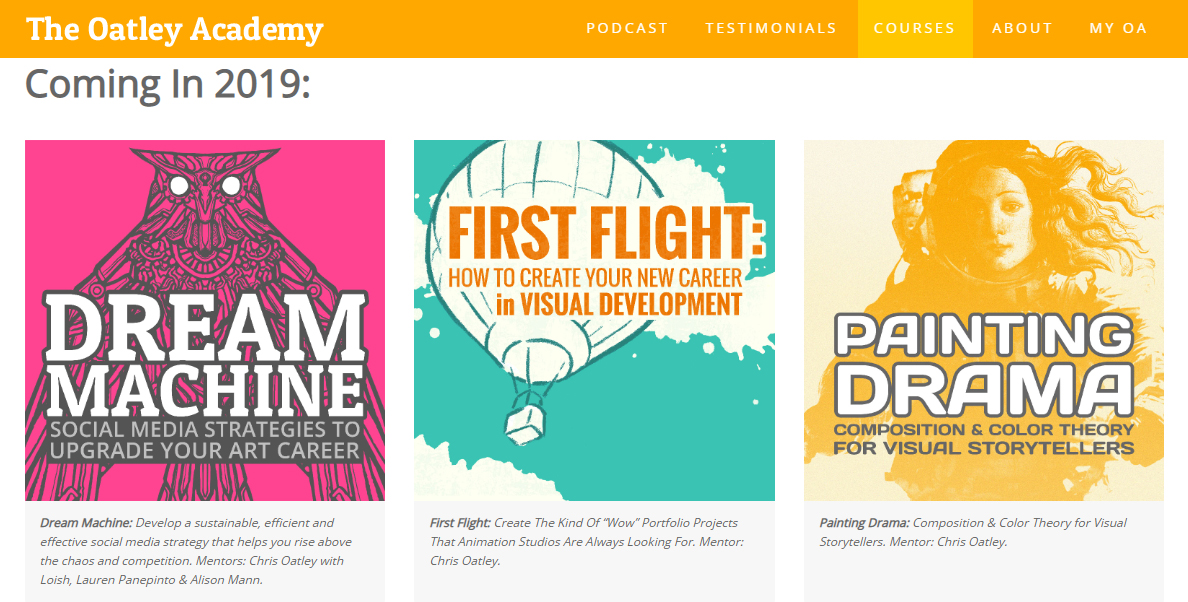
The Oatley Academy of Visual Storytelling, which helps artists farther their careers in blitheness, illustration, games and comics, takes a similar line. As its founder, Disney artist Chris Oatley, says: "Although we're an online school, we offer real-fourth dimension mentorships, where you work with the instructor and your boyfriend classmates in a virtual classroom setting, just like you would in a physical school. To me, 'Physical or online?' is not the question. The question is: 'How effective is the education?'"
In general, Oatley recommends what he calls a "Frankenstein approach" to fine art education. "Seek out the best teachers – whether online or offline – and learn from them," he advises. "It really can be that unproblematic… and far more affordable."
This article was originally published in ImagineFX , the earth's best-selling magazine for digital artists. Subscribe to ImagineFX .
Read more:
- How to break into pixel fine art
- How to get a blueprint job: vii practiced tips
- Design jobs: find your dream role with Artistic Bloq
Related articles
truaxwhernswille1957.blogspot.com
Source: https://www.creativebloq.com/advice/should-i-go-to-art-school
0 Response to "How Can Tyler School of Art Support You in Your Personal and Professional Goals"
Post a Comment